
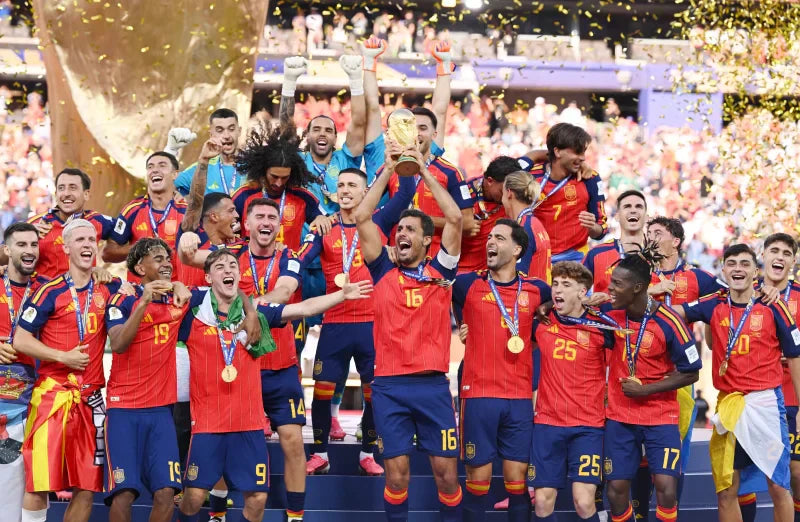
Spain are world champions once again. In a dramatic 2026 FIFA World Cup final at New York New Jersey Stadium in East Rutherford, Spain defeated Argentina 1–0 after extra time. Ferran Torres scored the only goal of the match, delivering Spain’s second men’s World Cup title and ending Argentina’s bid to become back-to-back champions.
The July 19 final brought together the reigning European champions and the defending world champions. It also placed two generations of global soccer talent on the same stage: Spain’s teenage sensation Lamine Yamal and Argentina’s 39-year-old icon Lionel Messi.
Ultimately, Spain’s patient possession, record-breaking defense and numerical advantage in extra time decided the championship.
Spain vs. Argentina 2026 World Cup Final: Quick Facts
- Final score: Spain 1–0 Argentina
- Date: July 19, 2026
- Venue: New York New Jersey Stadium, East Rutherford, New Jersey
- Winning goal: Ferran Torres
- Match result: Spain won after extra time
- Red card: Enzo Fernández, Argentina
- Spain’s World Cup titles: Two—2010 and 2026
- Tournament format: 48 teams and 104 matches
- Final attendance: 80,663
How Spain Won the 2026 World Cup Final
Spain controlled possession for much of the final, but Argentina made the European champions work for every opportunity.
During the opening 90 minutes, Argentina’s defense repeatedly blocked Spain’s crosses, disrupted passing lanes and prevented clear chances inside the penalty area. Goalkeeper Emiliano Martínez produced 11 saves, reportedly the most ever recorded by a goalkeeper in a men’s World Cup final.
Spain continued applying pressure. La Roja generated nearly a dozen shots on target while preventing Argentina from establishing a consistent attack.
The turning point arrived late in regulation.
Argentina midfielder Enzo Fernández received his second yellow card following a tackle on Spanish defender Pau Cubarsí. Because Fernández had already been booked for dissent, the second yellow resulted in a red card.
Argentina therefore entered extra time with only 10 players.
Spain used the additional space to increase the pressure. Nico Williams eventually met a cross with his head and redirected the ball into an open area in front of goal. Ferran Torres reacted first, finishing the opportunity and giving Spain the decisive 1–0 lead.
Argentina could not find an equalizer, and Spain lifted the trophy for the first time since 2010.
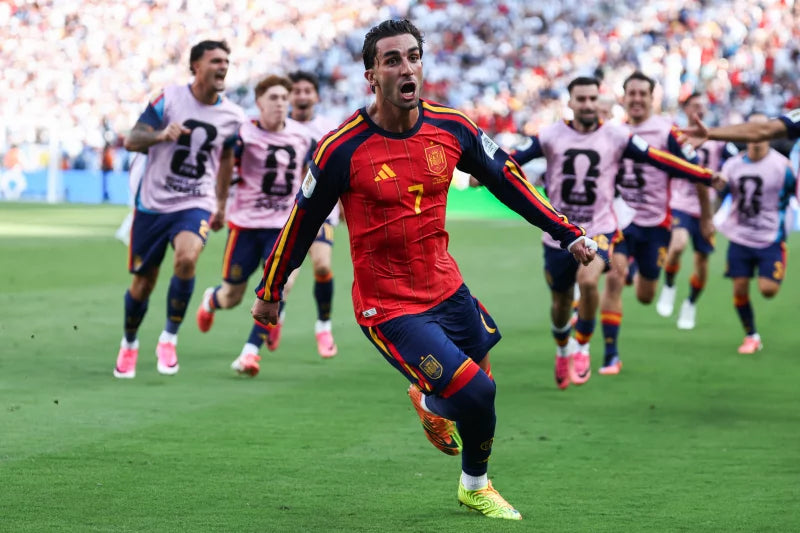
Spain’s Defense Made World Cup History
Spain’s championship was built on one of the greatest defensive performances in World Cup history.
La Roja conceded only one goal during the entire tournament. No previous men’s World Cup champion had allowed so few goals on the way to the title.
The achievement becomes even more impressive when considering the expanded 2026 format. Spain had to play eight matches to win the tournament—one more than champions played under the previous format.
Spain’s path also included several highly ranked opponents:
- A 1–0 win against Portugal
- A 2–1 quarterfinal victory over Belgium
- A 2–0 semifinal win against France
- A 1–0 extra-time victory over Argentina
Before the final, official FIFA statistics characterized the matchup as Argentina’s tournament-leading attack against Spain’s tournament-leading defense. Spain’s defense ultimately prevailed.
FIFA also reported that La Roja entered the final unbeaten in 37 matches, tied for the men’s international record at that point. The victory over Argentina extended the streak to 38 matches.
Spain’s Second Men’s World Cup Title
Spain’s first men’s World Cup championship came in South Africa in 2010. Sixteen years later, La Roja returned to the top of international soccer.
The 2026 victory completed an extraordinary stretch for the Spanish men’s national team. Spain arrived in North America as the 2024 European champion and finished the World Cup without losing a match.
The result also strengthened Spain’s position as a dominant force across both the men’s and women’s games. Spain became the first country to hold the men’s and women’s World Cup titles at the same time.
For a nation long associated with possession-based soccer and technically gifted midfielders, the 2026 team added another defining quality: defensive control.
Lamine Yamal Becomes a World Champion
Lamine Yamal entered the tournament as one of soccer’s brightest young stars and left as a world champion.
His speed, dribbling and creativity gave Spain a constant threat on the wing. Before the final, FIFA recorded Yamal as the tournament leader with 30 completed dribbles.
Although Yamal did not score the championship-winning goal, his presence forced Argentina to defend wide areas and helped create space for Spain’s other attacking players. Winning both the European Championship and World Cup so early in his career further established him as one of the defining players of his generation.
The final also carried powerful symbolism: Yamal, representing soccer’s future, competed against Messi, one of the greatest players in its history.
Lionel Messi’s Remarkable 2026 World Cup
Argentina did not successfully defend their title, but Lionel Messi still produced an exceptional tournament.
At 39 years old, Messi finished the World Cup with eight goals and four assists. His contributions included two important assists during Argentina’s semifinal victory over England.
Messi finished second in the Golden Boot race behind France forward Kylian Mbappé. After scoring twice in the third-place match, Mbappé completed the tournament with 10 goals and became the men’s World Cup’s all-time leading scorer with 22.
Questions will now turn to Messi’s international future. Regardless of whether the 2026 final was his last World Cup appearance, leading Argentina back to the championship match at age 39 added another extraordinary chapter to his career.
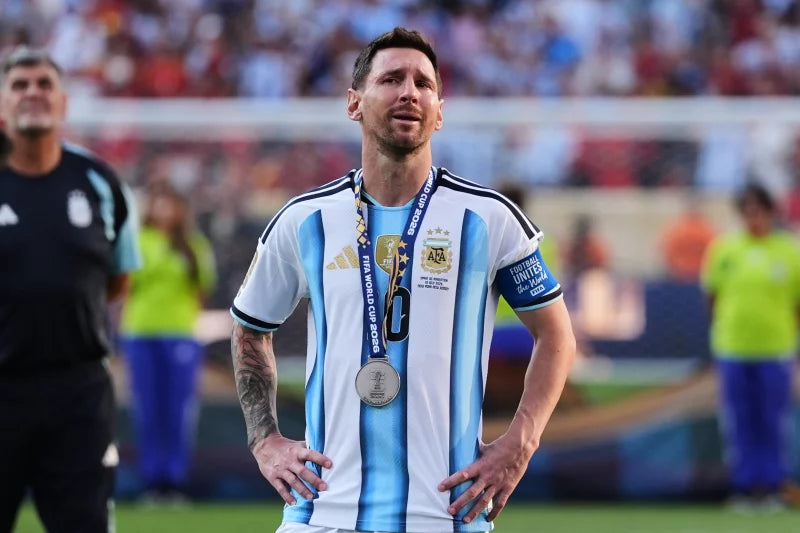
Why Argentina’s Attack Struggled
Argentina entered the final as the tournament’s most productive attacking team. Against Spain, however, opportunities were extremely limited.
Spain compressed the middle of the field, controlled possession and prevented Argentina from building sustained attacks. Through the first half of extra time, Argentina had recorded no shots and only two touches inside Spain’s penalty area.
The red card to Enzo Fernández made the challenge even more difficult. Playing with 10 men forced Argentina to defend deeper while reducing the support available to Messi and the other attackers.
Emiliano Martínez kept Argentina in the contest, but Spain’s repeated pressure eventually produced the decisive goal.
A Historic World Cup for North America
The 2026 tournament was the first men’s World Cup hosted jointly by the United States, Canada and Mexico. It was also the first edition to feature 48 teams.
A total of 104 matches were played across 16 host cities, making it the largest World Cup in history. The final took place just outside New York City, where fans filled trains, bars and public watch parties throughout the day.
Approximately 50,000 people reportedly attended a watch party in Central Park, while 80,663 spectators watched the final inside the stadium.
The championship match also featured the first halftime entertainment show staged during a World Cup final. The performance included international stars such as Shakira, Burna Boy, BTS, Justin Bieber and Madonna.
While the show was designed partly with American audiences in mind, its extended length generated debate among traditional soccer fans who felt it interrupted the rhythm of the match.
What Spain’s Victory Means
Spain’s 2026 World Cup title was more than a single-match triumph. It was the culmination of an unbeaten run, an elite defensive system and a new generation of players performing on soccer’s biggest stage.
La Roja defeated the world’s top-ranked team, stopped the defending champions and completed the most defensively dominant championship campaign in men’s World Cup history.
Argentina and Messi came close to another unforgettable title. But on a hot July evening in New Jersey, Spain’s patience finally broke through.
Ferran Torres supplied the goal. Spain’s defense protected it. And La Roja became world champions for the second time.
Frequently Asked Questions
Who won the 2026 FIFA World Cup?
Spain won the 2026 FIFA World Cup by defeating Argentina 1–0 after extra time in the final.
Who scored in the Spain vs. Argentina final?
Ferran Torres scored the only goal of the match for Spain during extra time.
Where was the 2026 World Cup final played?
The final was played at New York New Jersey Stadium in East Rutherford, New Jersey, on July 19, 2026.
How many World Cups has Spain won?
Spain has won two men’s FIFA World Cup titles. Its first championship came in 2010, followed by its second in 2026.
Why did Argentina play extra time with 10 players?
Enzo Fernández received a second yellow card late in regulation and was sent off. Argentina consequently played the extra-time period with 10 men.
How many goals did Spain concede during the tournament?
Spain conceded only one goal across eight matches, setting a new defensive benchmark for a men’s World Cup champion.
How did Lionel Messi perform at the 2026 World Cup?
Messi recorded eight goals and four assists. Argentina reached the final, and Messi finished second in the tournament’s Golden Boot race.